Choosing the Documentary approach with Sérgio Rizzo
Choosing the Documentary approach with Sérgio Rizzo
Presentation and Context
Documentary filmmaking can be understood not merely as a film about a specific subject or subjects; it is perhaps more accurate to define it as a film in which a production team—at a specific time and place—seeks to engage with a particular subject. The choice of the Documentary “Dispositif" (the formal approach or operational framework) is crucial to this engagement. First, it involves ethical considerations. What kind of relationship is intended with the film’s subjects and their environment? What are the parameters for transparency in that relationship, as well as in the relationship that will subsequently be established with the audience? In terms of audiovisual language, the choice of approach also entails defining aesthetic elements that, in harmony with ethical considerations, help shape the film's identity.
General Objective
To equip participants to develop documentary projects and understand the different trends in documentary production, based on the interplay between ethical and aesthetic aspects determined by the choice of the film's approach (the Documentary “Dispositif”).
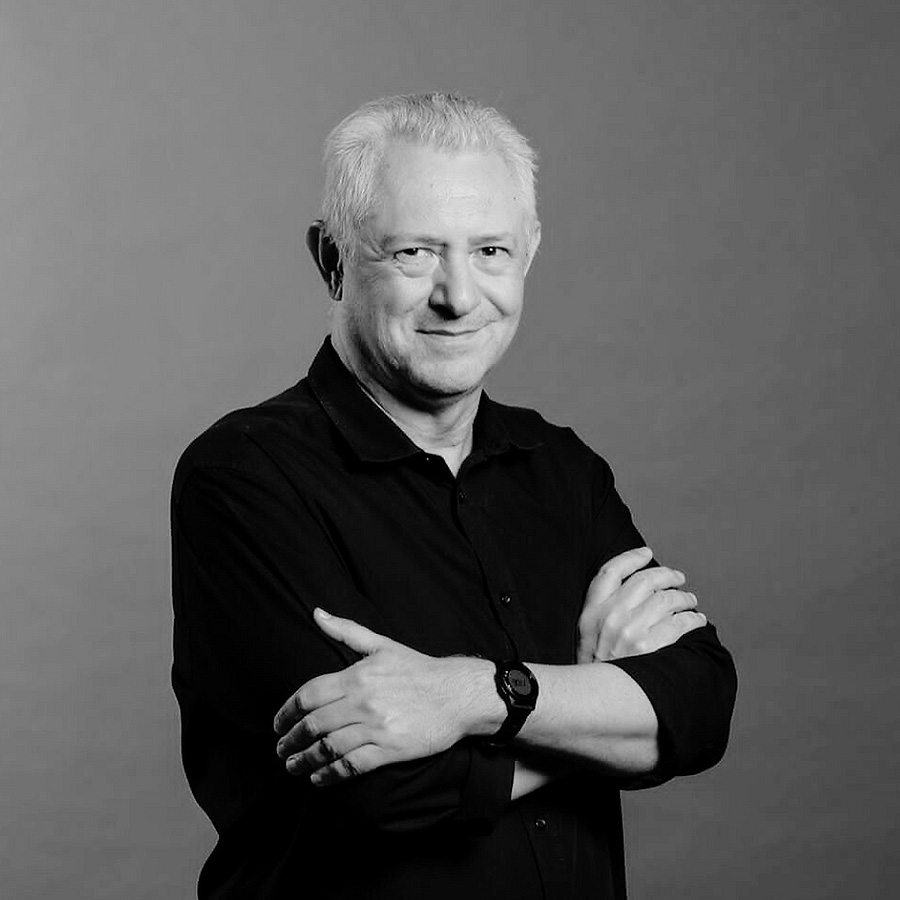
Sérgio Rizzo was born in São Paulo in 1965. With a degree in Journalism from the Methodista University of São Paulo (class of 1986), he completed his Master's degree in Arts/Cinema in 1994 at the School of Communications and Arts of the University of São Paulo, where he also earned his PhD in Audiovisual Media and Processes, defending his thesis in 2011. As a journalist, his career includes experience in magazine publishing houses (Ed. Abril, Ed. Segmento) and book publishers (Ed. Nova Cultural, Ed. Brasiliense), daily newspaper newsrooms (Folha de S. Paulo, A Gazeta Esportiva, Valor Econômico, O Globo), radio stations (Band News), TV channels (Arte 1), internet portals (UOL, Yahoo!), and corporate communications. A university professor since 1991, he has taught in the Communication departments at Methodista, the University of Mogi das Cruzes, Cásper Líbero College, Mackenzie Presbyterian University, and FAAP University Center. He directed the short documentary Passo (2018), which received the Best Editing Award at the 2018 Fest-Aruanda Film Festival in João Pessoa, Brazil, as well as the Brazilian segment of the collaborative feature film A Living Tree Means a Living Planet (2019). His screenwriting credits include the documentary Descarte (2020) and the television program Idade Mídia (Futura Channel/Globoplay, 2022–2023), which he also co-directed. He served as executive producer and content director of the documentary Cibernéticas (2023), and directed the documentary Doar. His other screenwriting credits include the documentary Comida para Quem Precisa and the series Casas Flutuantes com Amyr Klink, both produced by Deusdará Filmes. For Tukura Filmes, he directed the short film Vídeo Connection, which premiered at the 36th São Paulo International Short Film Festival – Curta Kinoforum. He is on the selection committee for É Tudo Verdade (It's All True) – International Documentary Film Festival, which will host its 32nd edition in 2027. He is a professor at Centro Universitário FAAP (Fundação Armando Álvares Penteado), where he teaches in the undergraduate programs in Film, Animation, and Journalism. He is also the creator and coordinator of Cine e Gestão, a program of courses and lectures developed at FIA Business School in partnership with Professor Marisa Eboli.